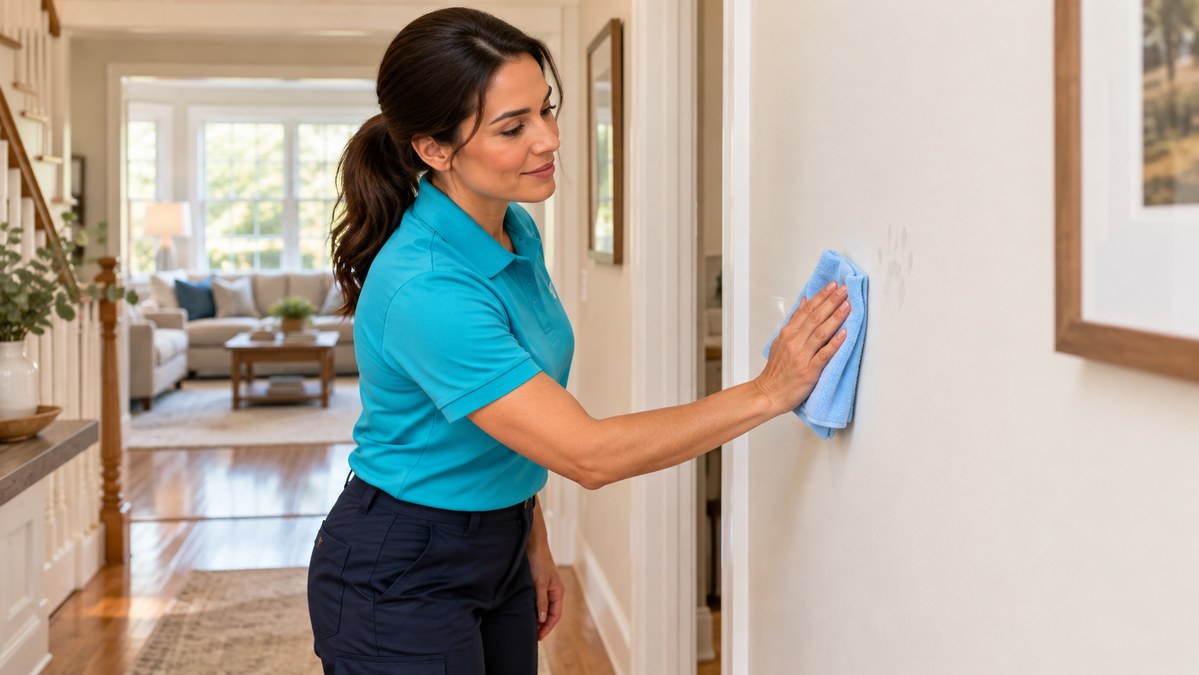
To clean painted walls without damaging the finish, remove loose dust first, check the paint’s care instructions, test a gentle method in an inconspicuous spot, and wipe with a soft, barely damp cloth. Stop if color transfers to the cloth or the sheen changes.
WALL CARE · GREATER BOSTON & NORTH SHORE
A mark near a light switch, a shoe scuff in the hallway, and fingerprints around a doorway can stand out in an otherwise tidy room. Scrubbing harder may remove the mark, but it can also leave a shiny patch on matte paint or take color off the wall.
This guide is for ordinary dust and light marks on sound, fully cured interior paint. Paint type, sheen, age, and the kind of stain all matter. When you know the paint brand or product, its care instructions should guide your choice of cleaner.
Identify the finish before cleaning painted walls
Flat and matte walls can show rubbing or uneven sheen more readily than some washable finishes. Even two walls with the same color may use different paint products. Before you touch a visible mark, check whether the paint is recently applied, whether the wall has a specialty coating, and whether the area is already peeling or damaged.
Benjamin Moore’s painted-wall care guidance recommends matching the approach to the finish and testing an inconspicuous area. Sherwin-Williams also advises testing the solution and technique before cleaning the visible part of a wall. If you cannot identify the finish, be especially cautious.
Decide whether it is dirt or damage
Look at the mark in daylight. A surface fingerprint is different from chipped paint, a water stain, or a dent in the wall.
- Check for peeling, softness, bubbling, or dampness.
- Note the paint sheen and how recently it was applied.
- Keep cleaning separate from patching or repainting.
Remove loose particles first
Use a clean microfiber cloth or an appropriate soft dusting attachment. Start with accessible areas and use a stable position.
- Lift dust rather than dragging grit across paint.
- Pay attention to reachable corners and doorways.
- Do not press a dirty cloth into a scuff.
Try the mildest approved method
Test a small hidden area with a soft, lightly damp cloth and only a product permitted by the paint maker. Let it dry so you can judge the result.
- Use very little moisture near seams and outlets.
- Avoid abrasive pads or aggressive spot erasers.
- Stop if paint color comes away or the sheen changes.
Wipe gently and dry
Work on a small mark with light pressure. If a cleaner is allowed, remove its residue as directed, then dry with a separate soft cloth.
- Do not saturate the wall or let liquid run downward.
- Check the area after it is fully dry.
- Leave a persistent mark for paint advice or touch-up.
Why can a cleaned spot look different from the rest of the wall?
Burnishing: Rubbing can make some flat or matte finishes appear shinier. Even if the dirt disappears, the change in sheen may remain visible from an angle. That is a reason to use light pressure and stop when a mark resists gentle cleaning.
Color transfer: If wall color appears on the cloth, the finish may be lifting. Continued wiping is unlikely to improve the appearance. Let the area dry and ask the paint maker or a painter about the next step.
Remaining stain or damage: A dark outline from water, an old adhesive mark, or a gouge may not be ordinary surface soil. Before covering a water stain, identify and resolve the source of moisture. Cleaning cannot repair a wall or make damaged paint look new.
Pay special attention to these high-use spots
Entryways collect handprints and occasional contact from bags or shoes. Hallways show marks at shoulder height and near corners. Light switches and door frames gather fingerprints, although switches and electrical fixtures require care around openings. Keep moisture away from outlets and controls.
In kitchens, a greasy spot may need a method approved for the paint rather than the same cloth you use on cabinets. In children’s rooms, crayon or marker may call for product-specific advice. Do not promise yourself that one cleaner will remove every mark: some stains are better handled with touch-up paint after the underlying issue is addressed.
A quick painted-wall cleaning checklist
- Identify the paint or ask for its care instructions.
- Check for dampness, peeling, or chipped areas before cleaning.
- Dust loose particles with a clean soft cloth or suitable attachment.
- Test a gentle approved method in a hidden spot and let it dry.
- Wipe small marks lightly without soaking the wall.
- Stop if color lifts, the sheen changes, or the mark persists.
- Ask a painter about stains or damage that cleaning cannot fix.
How does wall care fit into a professional cleaning visit?
Moro Pro Cleaning is based in Melrose and serves homes in Greater Boston and nearby North Shore communities. Routine dusting of accessible surfaces and detailed wall washing are different tasks. Review our services checklist and mention specific wall marks, paint finishes, and any recent painting before booking.
If your home needs attention across several rooms, our deep cleaning service may be a useful starting point. Tell us which surfaces matter most so we can discuss the scope. Heavy stain removal, high-wall work, paint touch-ups, and repairs should never be assumed to be part of a standard cleaning visit.
Frequently asked questions
Can I use a magic eraser on painted walls?
Be cautious. Some spot erasers act like a fine abrasive and can change the sheen or remove paint, especially on matte finishes. Check the paint maker’s instructions and test an approved method in an inconspicuous spot first.
Can I wash a wall that was just painted?
Follow the directions for the exact paint product and allow its recommended cure time. If you do not know the product or the date it was applied, ask the painter before washing.
What if a scuff remains after gentle cleaning?
Stop before repeated rubbing changes the finish. The mark may be a stain, transferred material, or damage that needs a painter’s assessment or a touch-up rather than more cleaning.
Does professional house cleaning include washing every wall?
Do not assume that it does. Tell the company which areas you want addressed and confirm whether accessible spot cleaning or more extensive wall work is available as part of the agreed service.
Plan a cleaning visit around your priorities.
Tell us about your rooms, finishes, and the areas you want us to review before your appointment.
Prefer to talk? Call (781) 720-9118.


A Cleaner Home Starts Here
Professional cleaning based in Melrose and serving Greater Boston. Explore your options and book online when you're ready.