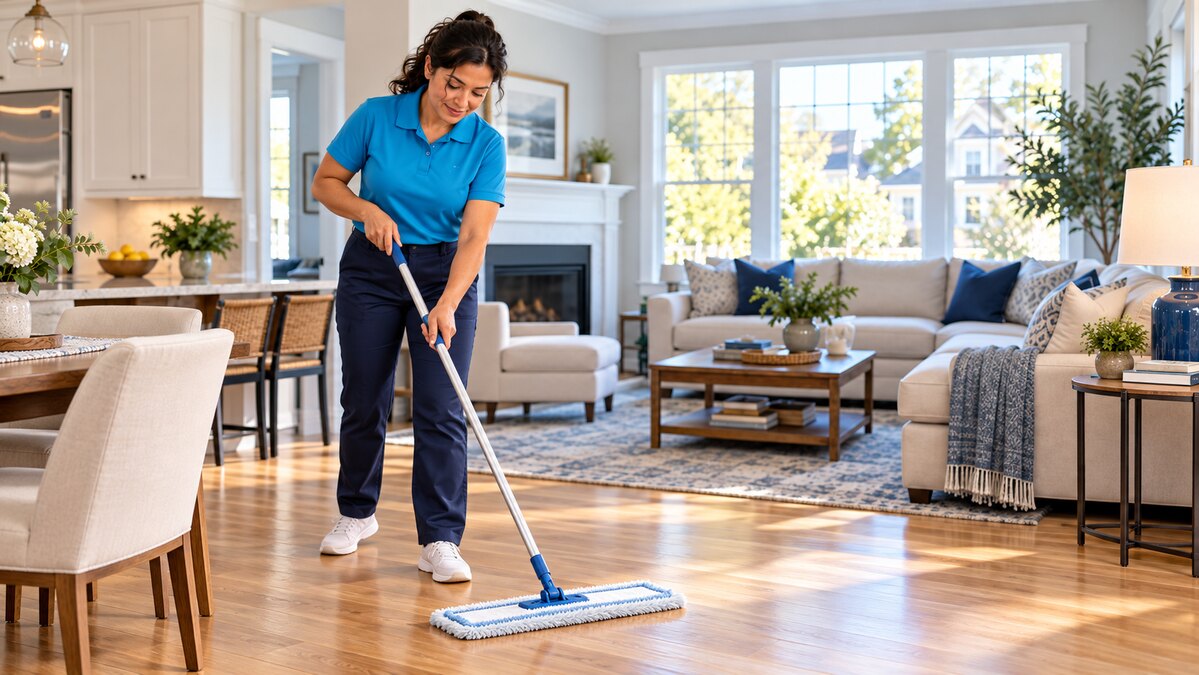
To clean hardwood floors without damaging the finish, remove loose grit first, wipe spills promptly, and use only a cleaning method suitable for your particular floor.
FLOOR CARE · GREATER BOSTON & NORTH SHORE
Wood floors give a room warmth, but entryway grit, kitchen spills, and everyday traffic can change how they look. In a Melrose house or Greater Boston apartment, even a well-kept floor may need extra attention near doors, dining chairs, and busy walkways.
A careful routine does more than make the surface look tidy. It helps you avoid dragging particles across the finish or leaving moisture where boards meet. Start with the floor you actually have, not a one-size-fits-all mopping trick.
Before you clean hardwood floors, check the finish
Find out whether your floor is solid or engineered wood and what finish protects it. A newer sealed floor, an older worn surface, and a floor with exposed joints may respond differently to moisture and cleaners. If you have care instructions from the installer or manufacturer, use those first. If the finish is unknown, ask a flooring professional before trying a new product on a visible area.
The National Wood Flooring Association recommends sweeping, dust mopping, or vacuuming with a bare-floor setting for routine debris removal. It also advises handling spills promptly with a dry or slightly damp cloth and avoiding wet and steam mops. Use a cleaner appropriate for the floor’s specific finish when one is needed.
Protect the path into the home
Place suitable mats at entrances and keep them clean. Grit carried by shoes or paws can scratch a finish as people walk through the room.
- Shake out or clean mats as needed.
- Check beneath mats for trapped moisture.
- Keep a tray for wet footwear near the door.
Use a gentle dry method first
Lift crumbs and dust with a soft broom, microfiber dust mop, or vacuum set for bare floors. Pay attention to edges where particles gather.
- Avoid dragging sharp debris across the floor.
- Check that vacuum wheels and attachments are clean.
- Follow the direction of the boards where practical.
Blot moisture promptly
Use a dry or only slightly damp soft cloth for an ordinary spill, following the floor maker’s directions. Do not allow liquid to sit in seams or beneath a rug.
- Blot rather than spreading the spill.
- Check adjacent board edges.
- Dry the area after treatment.
Use a compatible cleaner when needed
If dry care does not address ordinary residue, choose a product approved for the finish and use it according to the label. Test in a discreet area first.
- Keep the floor from becoming wet.
- Do not use a steam mop.
- Stop if the finish looks cloudy or transfers.
Common hardwood-floor mistakes to avoid
Cleaning grit with a wet mop first
Wet wiping before loose particles are removed can move grit around the floor. Begin with a suitable dry method. Then address any remaining marks with a finish-compatible product and the smallest amount of moisture allowed by its instructions.
Using one cleaner on every wood floor
Products made for other surfaces may leave residue or harm a particular finish. The NWFA recommends choosing a cleaner intended for the finish on your floor. Ask the installer or manufacturer when you are unsure. A dull patch does not necessarily mean the floor needs a stronger cleaner; the finish may need professional evaluation.
Leaving wet mats or spills in place
An entry mat can catch dirt, but it can also hide moisture. Lift it occasionally and check the wood underneath, especially after snow or rain. Wipe spills promptly, including around the sink, pet bowls, and plant containers. If boards swell or discolor, cleaning alone cannot repair the damage.
Adjust the routine to the busiest rooms
Entryways need frequent attention to loose grit and wet footprints. Kitchens can have crumbs and drips near the sink or dining area. Living rooms may collect dust along furniture edges, while bedrooms tend to need lighter routine care. Choose the order based on where the floor actually shows wear, rather than treating every room as equally dirty.
Move small, light items when it is safe to do so, and clean the accessible floor beneath them. Do not drag heavy furniture across the boards. Check furniture pads and the underside of a chair before it scratches the surface. For a household with pets, pay attention to entry routes and feeding areas without allowing water to pool near bowls.
A practical hardwood-floor checklist
- Identify the floor and its finish before choosing a product.
- Clean entrance mats and check beneath them.
- Remove loose debris with a suitable soft tool or bare-floor vacuum setting.
- Blot fresh spills promptly and dry the area.
- Use only a finish-compatible cleaner when more than dry care is needed.
- Note scratches or swelling for a flooring professional rather than scrubbing them.
If you are comparing professional services, Moro Pro Cleaning’s services checklist gives a starting point for discussing floors alongside other room tasks. Tell the team about the floor finish and any product restrictions before your visit.
How can professional cleaning fit your routine?
Ordinary home cleaning can support agreed, accessible floor care as part of a broader kitchen, bathroom, bedroom, and living-area visit. Share the kind of flooring in each room and identify any worn finishes, delicate areas, or existing damage. A cleaner can address ordinary surface dirt within the booked scope, while refinishing and repairs belong with a flooring specialist.
For steady upkeep, recurring cleaning can help with routine tasks on an agreed schedule. If several rooms also have accumulated buildup, discuss whether a deep cleaning visit makes sense. Even with professional visits, promptly wiping fresh spills and keeping entrance grit under control remain useful between appointments.
Frequently asked questions
Can I use a steam mop on hardwood floors?
The National Wood Flooring Association advises against steam mops on wood floors because moisture and heat can damage the floor and finish over time. Follow the instructions for your specific floor.
What should I do if I do not know the floor finish?
Start with gentle dry debris removal. Ask the installer, manufacturer, or a flooring professional before trying a new liquid cleaner on a visible area.
Why does my floor look dull after cleaning?
Residue, wear, or a changed finish can all affect appearance. Do not keep adding product to solve an unidentified issue. Check the product and floor guidance, then ask a flooring professional if the dullness remains.
Will a deep clean remove scratches or water damage?
No. Cleaning can remove appropriate surface dirt, but scratches, swollen boards, and damaged finish need separate assessment and possibly repair.
Build a cleaning routine around your home.
Moro Pro Cleaning is based in Melrose and serves Greater Boston and nearby North Shore communities. Tell us about your flooring, rooms, and cleaning priorities so we can discuss the service that fits.
Prefer to talk? Call (781) 720-9118.


A Cleaner Home Starts Here
Professional cleaning based in Melrose and serving Greater Boston. Explore your options and book online when you're ready.