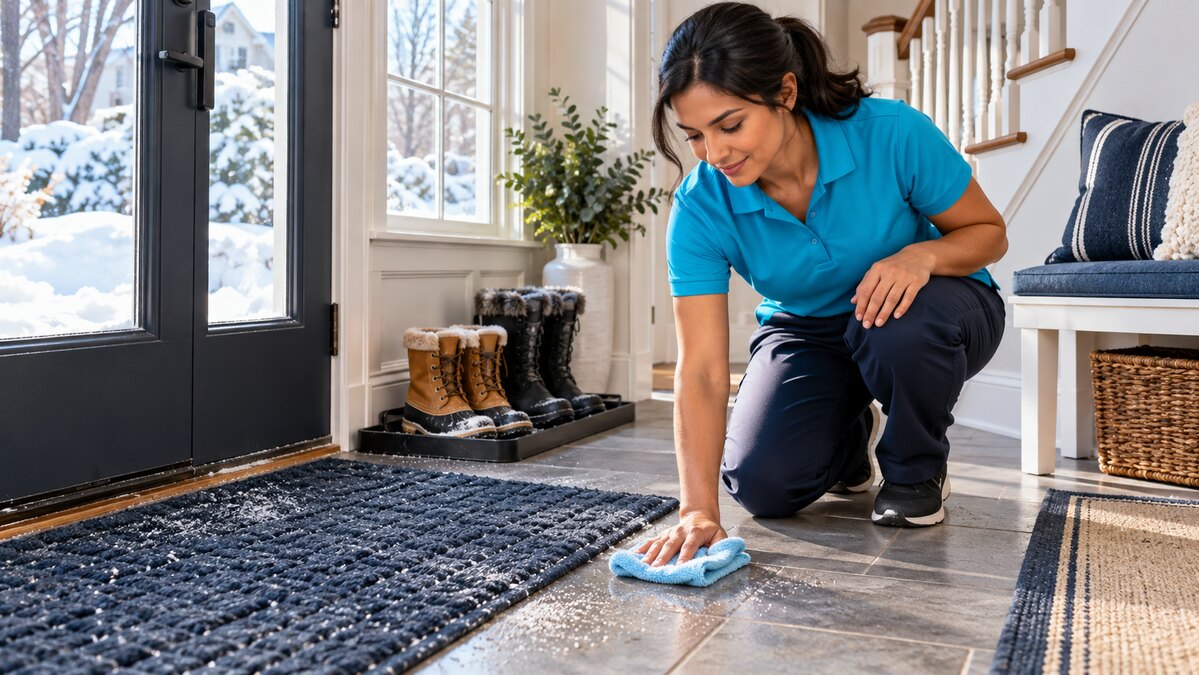
Winter salt and slush cleaning starts at the door. Catch the grit before it spreads, dry wet spots promptly, and use a method suited to each floor.
WINTER HOME CARE · GREATER BOSTON & NORTH SHORE
A snowy commute through Boston or a quick walk outside in Melrose can leave white tracks across an entryway. Boots, bags, strollers, and pets carry moisture and residue farther into the home. In apartments and older houses, the route from the front door to the kitchen or living room may be short, so a small mess can spread quickly.
You do not need to deep clean the whole house after every storm. A practical entry routine, careful floor care, and a plan for the high-traffic rooms can keep winter upkeep manageable.
Why winter salt and slush cleaning needs a plan
Salt residue, gritty particles, and standing moisture create different problems. Grit can scratch some finishes when it is dragged across the floor, while water left near seams or edges can cause trouble for moisture-sensitive materials. The National Wood Flooring Association recommends mats at entrances, frequent removal of tracked-in debris, and prompt attention to puddles on wood floors.
Start by identifying the floor in each area. Wood, laminate, tile, vinyl, and carpet do not all call for the same cleaner or amount of moisture. When you are unsure of a finish, follow its manufacturer’s care instructions or ask a flooring professional before treating a mark.
Stop some of the mess before entry
Use a sturdy outside mat where building rules allow it. Encourage everyone to wipe their shoes, especially after sidewalks have been treated. Shake out or clean the mat as needed so it does not become another source of grit.
For a shared entry, check whether the building manager maintains the common mat and stairwell. A private-unit cleaning is a different scope from cleaning the whole building.
Give boots a landing place
Place a suitable indoor mat or boot tray near the entrance. Leave room to remove wet footwear without crossing the living area. Keep a small cloth or towel nearby for drips and a place where damp outerwear can dry.
Choose materials that will not trap moisture against your particular floor; lift mats periodically and check underneath them.
Remove loose grit first
Watch the route from the door to the hallway, kitchen, and stairs. Once tracked-in material dries, lift loose grit with a suitable vacuum setting or soft dust mop before wiping the floor. This helps avoid rubbing particles over a sensitive finish.
Use the floor’s approved cleaning method for any remaining residue. Avoid trying a stronger product simply because a white mark remains.
Do not let puddles sit
Blot melted snow and wet footprints promptly with an absorbent cloth. Pay attention to the edges of mats and places where boots stand. If the area remains slippery, keep people off it until it is dry.
On wood, avoid soaking the surface. The flooring association advises a dry or only slightly damp cloth for spills and warns against wet and steam mops.
How to care for different surfaces
Wood and moisture-sensitive floors
Protect these floors with entry mats and quick cleanup. Sweep, dust mop, or vacuum on an appropriate bare-floor setting to remove grit. Then use only a cleaner compatible with the finish, following its instructions. The National Wood Flooring Association’s maintenance guidance cautions against wet and steam mops on wood.
If a white mark, dull patch, swelling, or other damage remains after ordinary cleaning, do not scrub aggressively. A cleaning visit cannot repair a damaged finish; ask a flooring specialist how to assess it.
Tile and other resilient entry floors
Even a durable entry floor benefits from removing grit before a wipe-down. Check the manufacturer’s directions for the surface and grout, then use a suitable product and dry the area. Avoid assuming that one solution is safe for tile, stone, vinyl, and laminate alike.
Rugs and carpet
Let wet footwear stay on a tray rather than on a rug. Vacuum dry tracked-in debris using a setting suitable for the material, and address spills according to the rug or carpet maker’s guidance. If moisture reaches the backing or a stain persists, ask about appropriate specialist care rather than saturating it yourself.
A five-minute reset after a snowy day
- Set wet boots on the tray and hang damp outerwear.
- Blot puddles and check beneath the inside mat.
- Pick up visible grit along the entry and main walkway.
- Wipe a compatible surface only after loose debris is removed.
- Give the area time to dry before the next rush through the door.
If you have a dog, keep a towel by the door and make paw cleanup part of the same routine. Our house cleaning with pets guide has more ideas for fur and tracked-in dirt throughout the year.
Where professional cleaning can help
A home cleaning visit can address accessible floors, ordinary dust, and the kitchens, bathrooms, and living areas that get regular traffic. Describe the floor materials, the condition of the entryway, and any product restrictions before booking. Tell the team if an area has stubborn salt residue or a delicate finish so the scope can be reviewed rather than assumed.
For a home already on a maintenance schedule, recurring cleaning can help with the agreed routine work while your household handles quick wet-footprint cleanup between visits. If several rooms need more detailed attention after a long winter, discuss whether a deep cleaning visit is appropriate. Cleaning does not replace floor refinishing or restoration.
Frequently asked questions
Can I mop salt off every type of floor?
No. Check the flooring material and its care instructions first. Remove loose grit, dry puddles, and use only the method approved for that floor. Wood and other moisture-sensitive floors need particular care.
Why do white footprints return near my front door?
They may be coming from shoes, a saturated mat, or grit still lodged in the entry route. Clean or replace the mat as needed, keep footwear on a tray, and remove loose residue before wiping the floor.
Does a standard house cleaning include repairing salt damage?
No. Ordinary cleaning addresses accessible surfaces and floors within the booked scope. Discoloration, damaged finishes, warped boards, and specialist stain removal need separate assessment.
What should I tell the cleaner about my entryway?
Identify the flooring material, any delicate finish, product instructions, existing damage, and the places salt collects. Mention a shared building entrance separately if you want that area discussed.
Keep your winter routine manageable.
Moro Pro Cleaning is based in Melrose and serves homes across Greater Boston and nearby North Shore communities. Tell us about your home, its surfaces, and the rooms that need attention, then choose a cleaning service that fits.
Prefer to talk? Call (781) 720-9118.


A Cleaner Home Starts Here
Professional cleaning based in Melrose and serving Greater Boston. Explore your options and book online when you're ready.